← Back to Blogs

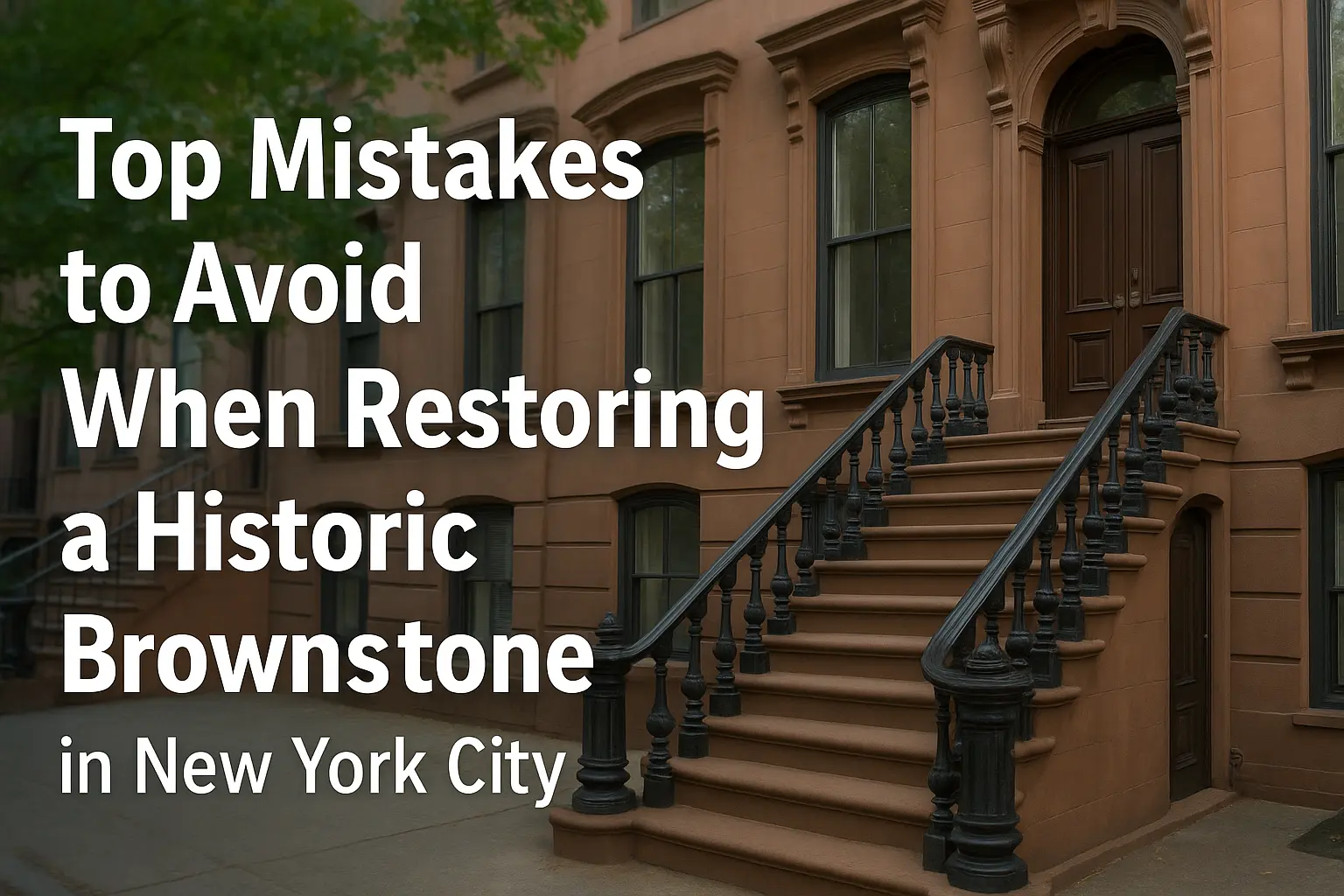
Top Mistakes to Avoid When Restoring a Historic Brownstone in New York City


Restoring a historic brownstone in New York City is a rewarding project, but it also comes with challenges that many property owners don’t see coming. These iconic homes in Brooklyn, Manhattan, Queens, and the Bronx require careful attention, skilled craftsmanship, and a clear understanding of preservation rules. One wrong decision can lead to expensive fixes, structural damage, or even violations with the Landmarks Preservation Commission.

This guide walks you through the top mistakes to avoid when restoring a historic brownstone and explains how to get the results you want without compromising history or quality. If you want your project to be smooth, long lasting, and compliant, this breakdown will help you make informed decisions.
Let’s get into it. Many owners jump into renovation plans too quickly. A historic brownstone is not a regular home, and treating it like one often leads to trouble.

What you should know before starting:
  • The original architectural style
  • The condition of masonry, cornices, lintels, and stoops
  • Landmark status and restrictions
  • Previous repairs that may affect restoration
Pro tip: Hire a contractor who specializes in brownstones in NYC. They understand both the structure and local regulations.

Ignoring Landmarks Preservation Commission (LPC) Rules

If your brownstone falls under NYC landmark zones, every exterior change must follow LPC guidelines. Owners sometimes replace materials or make updates that aren’t approved.

Common violations:
  • Using the wrong mortar
  • Replacing brownstone with cement
  • Installing incorrect windows
  • Changing the façade design
Fixing these violations later is costly and stressful. Always check LPC requirements before any work begins.

Using the Wrong Materials

This is one of the biggest mistakes seen in brownstone restoration. Many contractors who lack experience use modern materials that are not compatible with historic masonry.

Materials to avoid:
  • Concrete instead of genuine brownstone
  • Synthetic coatings
  • Harsh chemical cleaners
  • Incorrect mortar mixes
Using the wrong materials can trap moisture, cause cracks, and destroy the integrity of the façade. Experienced restoration specialists always match materials to the original structure.

Poor Masonry and Stucco Repairs

Brownstone masonry is delicate. If the façade is not repaired using traditional methods, the surface can deteriorate faster than before.

Issues caused by bad masonry work:
  • Spalling
  • Flaking
  • Water absorption
  • Visible patchwork
  • Color mismatches
hand tools, custom mixes, and proper curing techniques.

Overlooking Water Damage and Drainage Issues

Water is the number one enemy of historic brownstones. Many owners repair the façade but forget to address the root cause, which is usually water infiltration.

Signs of hidden water issues:
  • Efflorescence
  • Mold in the basement
  • Cracks around windows
  • Soft or crumbling stone
gutter repair, and proper drainage planning.

Hiring Non-Specialized Contractors

Many general contractors claim to handle brownstone restoration, but few understand the specialized processes involved.

Risks of hiring the wrong team:
  • Cheap patch jobs
  • Incorrect restoration techniques
  • Delays
  • Lack of compliance with city codes
  • Lower property value
Choose a contractor known for brownstone restoration in Brooklyn, Manhattan, Queens, and the Bronx, such as Infinity Construction NYC, which has hands-on experience with historic buildings.

Skipping a Thorough Structural Assessment

Brownstones often have hidden structural problems that develop over decades.

Areas that should always be inspected:
  • Foundation
  • Roof and parapet
  • Load bearing walls
  • Joists and beams
  • Fire escapes
Skipping this step can lead to expensive surprises halfway through the project.

Failing to Match Historical Details

The charm of a brownstone lies in its details. Many restorations look odd because the contractor did not match the original design.

Important details to restore correctly:
  • Cornices
  • Lintels
  • Railings
  • Window frames
  • Entry doors
  • Stoops
These features require custom craftsmanship and attention to historical accuracy.

Painting Over Brownstone

Painting brownstone may look like a quick fix, but it causes serious long term damage.

Why painting brownstone is a mistake:
  • Paint seals moisture inside
  • It speeds up deterioration
  • It hides structural cracks
  • It makes future restoration harder
Instead, proper resurfacing and finishing should be done using breathable materials.

Not Planning for Long Term Maintenance

Even after expert restoration, a brownstone needs consistent care.

Maintenance must include:
  • Seasonal inspections
  • Quick repairs of cracks and chips
  • Roof and gutter cleaning
  • Waterproofing checks
  • Masonry touch ups
Skipping maintenance leads to faster deterioration, especially in NYC weather.

Why This Matters in NYC

Historic brownstones across Brooklyn, Manhattan, Queens, and the Bronx are exposed to:

  • Heavy traffic vibrations
  • Harsh winters
  • Humidity
  • Pollution
  • Landmark regulations

This makes expert restoration essential. The combination of dense neighborhoods and older architecture means every decision affects the structure long term.

If you live in areas like Park Slope, Fort Greene, Harlem, Upper West Side, Astoria, or Mott Haven, restoration must consider local building patterns and neighborhood history.

Quick Answers for Voice Search


Here are short, direct responses that help your content show up in featured snippets and voice search.

1. What is the biggest mistake in brownstone restoration?
Using the wrong materials or hiring a contractor without experience in historic masonry.


2. Do I need LPC approval to restore my brownstone?
Yes, if your property is in a landmark district. Any exterior work must follow LPC guidelines.


3. How long does brownstone restoration last?
A high quality restoration can last 20 to 30 years with proper maintenance.


4. Is repainting brownstone a good idea?
No. Paint damages the surface and traps moisture.


5. What should I check before starting restoration?
Inspect masonry, structural stability, water damage, and landmark restrictions.

FAQs About Brownstone Restoration in NYC


1. How do I know if my brownstone needs restoration?
Look for cracks, flaking, water stains, discoloration, and crumbling stone. A professional evaluation can confirm the condition.


2. How much does a brownstone restoration cost in NYC?
Costs vary based on damage, materials, and the size of the building. Historic buildings typically require custom work, which affects pricing.


3. Can I repair small cracks myself?
DIY repairs often worsen the problem. Use a specialist who understands brownstone material and restoration techniques.


4. How long does a full façade restoration take?
Most projects take several weeks to a few months depending on the scale of work and weather conditions.


5. Can modern materials be used in brownstone restoration?
Only if they are compatible. Traditional materials are usually best for maintaining longevity and structural health.


6. Why is brownstone restoration more complex in NYC?
NYC has landmark laws, older homes, dense neighborhoods, and extreme weather, which all increase the complexity.


7. How do I choose the right restoration contractor?
Look for companies with proven brownstone projects in NYC, strong reviews, and expertise in landmarks and historical preservation.

Internal Linking Suggestions


Use links on your website to improve navigation and SEO:

  • Link to your Brownstone Restoration Services page
  • Link to your Masonry Repair page
  • Link to your Historical Landmark Restoration page
  • Link to your Portfolio or Gallery
  • Link to your Contact Us page

External Reference Ideas


These trusted resources can enhance authority:

  • NYC Landmarks Preservation Commission
  • NYC Department of Buildings
  • National Trust for Historic Preservation

Conclusion


Restoring a historic brownstone is a meaningful investment in both beauty and heritage. Avoiding common mistakes helps protect your structure, preserve original features, and increase property value. Whether your brownstone is in Brooklyn, Manhattan, Queens, or the Bronx, choosing an experienced restoration team ensures your project is safe, compliant, and built to last.

If you want high quality, compliant, and authentic restoration work, Infinity Construction NYC is the trusted choice for homeowners across New York City.

Call to Action


Ready to restore your brownstone the right way?
Reach out to Infinity Construction NYC for expert guidance, a detailed inspection, and professional restoration services that protect the history and integrity of your home.

   Top Mistakes to Avoid When Restoring a Historic Brownstone in New York City