Knowing how to repair a brownstone facade is essential for maintaining the beauty, safety, and value of a historic property. Brownstone exteriors can deteriorate over time because of moisture penetration, temperature changes, aging mortar, and natural stone erosion. The right restoration approach involves identifying the underlying damage, repairing weakened masonry, restoring missing stone surfaces, and preventing future water infiltration.
For New York City property owners, professional brownstone facade restoration helps preserve original architectural details while protecting buildings against further deterioration.
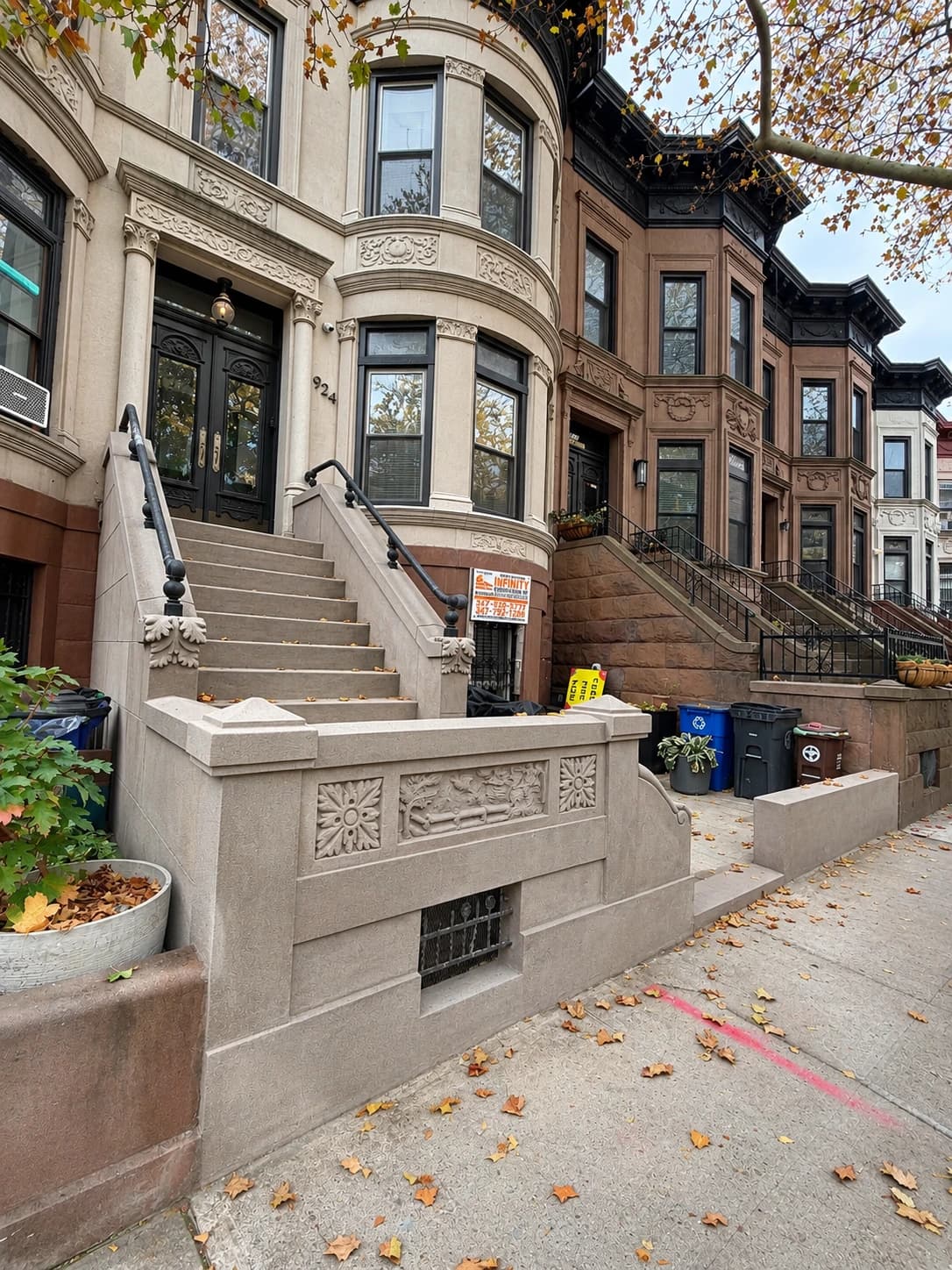
Brownstone facade repair is the process of restoring damaged sandstone surfaces, mortar joints, decorative architectural features, and other exterior masonry components.
Brownstone is a historic building material commonly found in Brooklyn and Manhattan townhouses. Its warm reddish-brown appearance makes it architecturally distinctive, but prolonged exposure to moisture and weather can cause deterioration.
Professional restoration may include:
The objective is to preserve as much original material as possible while restoring the facade's strength and appearance.
Recognizing early warning signs can prevent minor defects from developing into expensive restoration projects:
Caution: Ignoring these problems can accelerate deterioration and increase repair requirements.
A successful brownstone wall repair project should follow a systematic restoration process:
A professional contractor examines the entire exterior to identify loose stone, cracks, moisture damage, deteriorated mortar, and structural concerns. The inspection helps determine whether localized repairs or more extensive restoration are necessary.
Loose stone fragments and deteriorated repair materials are carefully removed without unnecessarily damaging original masonry. Aggressive grinding and inappropriate cleaning methods should be avoided.
Depending on the condition, contractors may use compatible stone patching materials, carefully matched replacement stone, or localized resurfacing techniques.
Damaged mortar joints are carefully prepared and filled with a compatible mortar mix. Mortar should be appropriately weaker and more permeable than the surrounding masonry to reduce the risk of damaging historic stone.
Specialists match the brownstone's original color, texture, profile, and architectural detailing. Decorative elements may require skilled hand-finishing.
The final stage includes correcting drainage issues, repairing flashing, checking gutters, and addressing other sources of water penetration.
Proper diagnosis and compatible materials are essential for long-lasting brownstone exterior restoration.
Professional restoration offers several long-term advantages:
For older Brooklyn and Manhattan townhouses, preserving original brownstone is generally preferable to unnecessary replacement.
The cost of brownstone facade restoration NYC projects depends on the extent of deterioration, accessibility, materials, and required craftsmanship. There is no reliable universal price because every historic facade has different restoration needs.
| Cost factor | How it affects the estimate |
|---|---|
| Surface patching | Generally requires less labor and material |
| Extensive stone deterioration | Requires more preparation and skilled restoration |
| Mortar repointing | Depends on joint condition and facade area |
| Decorative restoration | Requires specialized craftsmanship |
| Scaffolding and access | Adds setup and safety costs |
| Permits and inspections | May increase project expenses |
Request a detailed inspection and written estimate before starting work. The estimate should identify repair methods, material specifications, access requirements, and any applicable permit costs.
Brownstone restoration requires more than filling cracks or applying a new surface coating. Incorrect materials can trap moisture, accelerate deterioration, and damage original stone.
The New York City Landmarks Preservation Commission provides specific guidance for repairing and resurfacing historic brownstone. Its recommendations distinguish localized repairs from extensive resurfacing and emphasize appropriate materials and craftsmanship.
For landmarked buildings and properties in designated historic districts, owners should check permit requirements before beginning exterior work.
A qualified contractor should offer:
Regular maintenance helps extend the life of restored masonry:
Expert recommendation: Always investigate the source of moisture before repairing the visible damage. A beautiful patch will not last if water continues entering the wall.
Infinity Construction NYC provides professional brownstone facade restoration services throughout Brooklyn, Manhattan, Queens, and the Bronx. The company specializes in historic masonry preservation, sandstone repairs, facade resurfacing, mortar repointing, waterproofing, lintel repairs, and decorative stone restoration. Its approach combines traditional masonry craftsmanship with modern restoration techniques to address deterioration while preserving architectural character.
Whether your property needs localized brownstone wall repair or a more extensive exterior restoration, the team evaluates existing conditions and recommends appropriate solutions. Property owners can also explore its brownstone restoration services for additional information. Contact Infinity Construction NYC at 347-939-5779 to schedule a consultation and request a restoration estimate.
Understanding how to repair a brownstone facade helps property owners protect their buildings against moisture, weathering, and masonry deterioration. From repairing crumbling brownstone to restoring decorative features and repointing mortar joints, every repair should prioritize compatible materials and preservation-focused workmanship.
For dependable brownstone facade restoration NYC services, consult experienced masonry professionals who understand the requirements of historic buildings. Early inspections and appropriate repairs can help preserve your property's architectural beauty for generations.