New York City's brownstones are among the most iconic and historically significant properties in neighborhoods such as Brooklyn Heights, Park Slope, Fort Greene, Bed-Stuy, Harlem, and the Upper West Side. When deterioration appears, choosing the right brownstone restoration contractor in NYC becomes one of the most important decisions a property owner can make.
This guide explains what to look for in a contractor, questions to ask, warning signs to avoid, and how experienced restoration specialists help preserve historic architecture while improving long-term building performance.
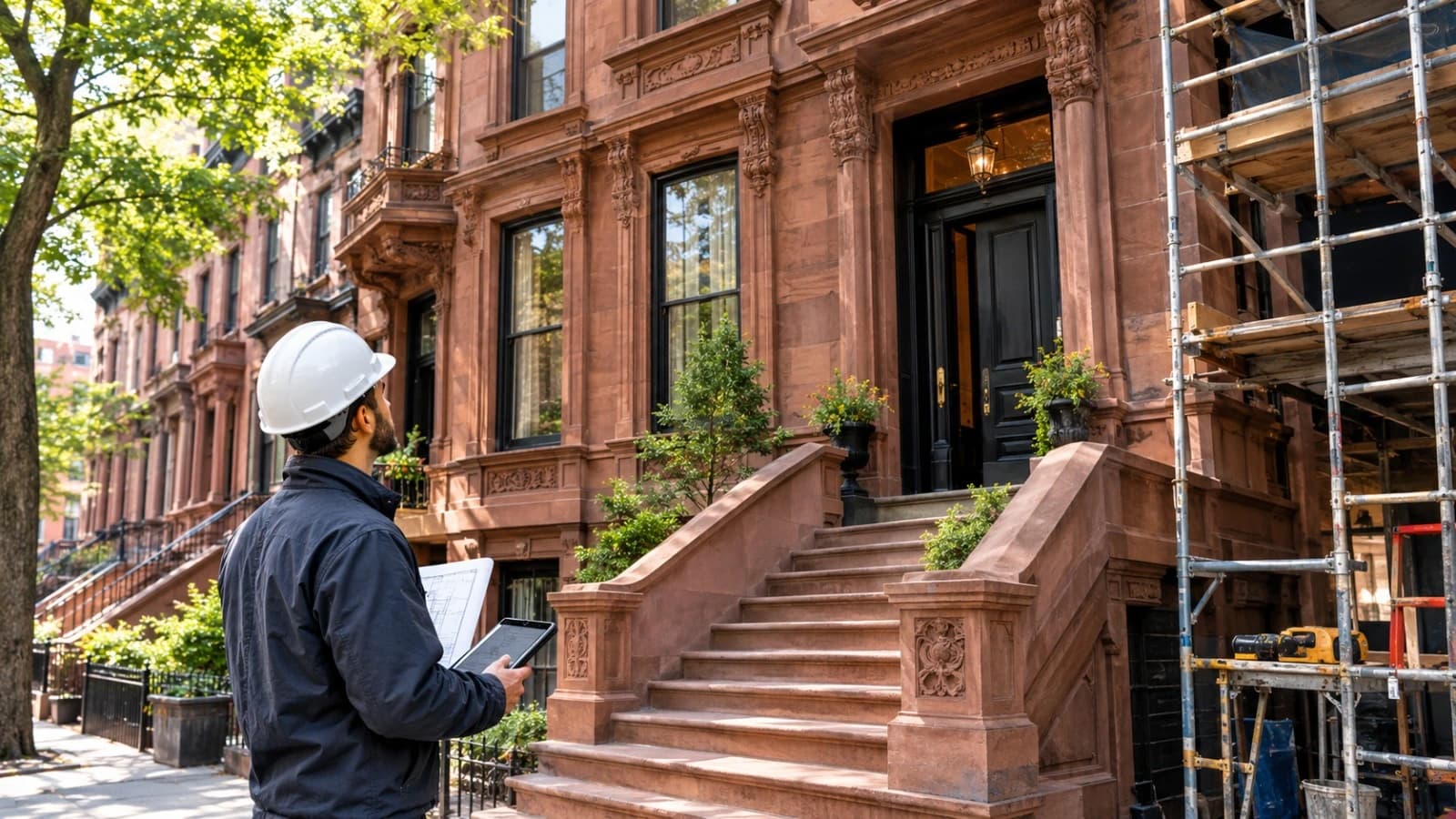
Brownstone restoration is the process of repairing, preserving, and when necessary rebuilding deteriorated portions of a historic brownstone property. Unlike cosmetic repairs, restoration focuses on maintaining architectural integrity while addressing the underlying causes of deterioration.
Depending on the building's condition, restoration may include facade repair, resurfacing, stoop restoration, masonry repairs, brick pointing, waterproofing, cornice restoration, crack repair, limestone restoration, and historic detailing.
A professional restoration contractor should determine why the damage occurred before recommending repair methods. Moisture infiltration, deteriorated mortar, freeze-thaw cycles, structural movement, and incompatible previous repairs can all contribute to long-term deterioration.
Historic masonry requires specialized knowledge that differs significantly from modern construction methods. Brownstones were built using traditional materials and techniques that must be respected during restoration.
Using incompatible materials or improper repair methods can accelerate deterioration rather than solve it. A qualified contractor should understand brownstone characteristics, mortar compatibility, water infiltration, masonry behavior, facade restoration techniques, and NYC-specific construction requirements.
The objective should not simply be improving appearance. Successful restoration protects historic character while enhancing structural performance and weather resistance for years to come.
One of the first questions homeowners should ask is how much experience a contractor has restoring brownstone and historic masonry properties throughout New York City.
A company may have extensive construction experience yet possess limited knowledge of century-old brownstone buildings. These projects require specialized restoration expertise rather than general construction skills.
Contractors who regularly work on historic masonry properties are typically better equipped to identify underlying problems and apply restoration methods that preserve original materials whenever possible.
Brownstone restoration is not the same as a standard renovation project. Historic properties often require careful attention to original materials, architectural details, facade appearance, and preservation requirements.
If a property is individually landmarked or located within a designated historic district, exterior work may be subject to approval requirements. Contractors should understand how historic preservation affects repair methods, materials, documentation, and project planning.
Experience with historic restoration can help avoid unnecessary alterations that compromise a building's architectural character.
A successful restoration project begins with a detailed inspection. Homeowners should be cautious if a contractor provides pricing without first evaluating the property's condition.
A proper inspection should focus on identifying both visible damage and the underlying causes of deterioration.
The goal should be understanding why deterioration is occurring, not simply repairing the visible symptoms.
Materials play a critical role in brownstone restoration. Historic masonry often requires carefully selected materials that are compatible with the existing building fabric.
Contractors should be able to explain which materials they intend to use and why those materials are appropriate for the project.
Materials that perform well on modern buildings may not be suitable for historic masonry structures. Compatibility helps preserve both appearance and long-term durability.
Brownstone facades can experience various forms of deterioration, including cracks, surface flaking, missing sections, discoloration, water damage, and previous repair failures.
Experienced restoration contractors evaluate the severity of the damage before determining whether repairs, patching, resurfacing, or replacement are necessary.
Depending on the condition of the facade, restoration may involve carefully removing deteriorated material, preparing the substrate, rebuilding damaged architectural profiles, and matching surrounding textures and finishes.
High-quality restoration work should blend naturally with the existing architecture and preserve the property's historic appearance.
Many brownstone owners focus on visible stone deterioration while overlooking the condition of mortar joints. However, failing mortar can become a major source of water infiltration and masonry damage.
Brick pointing, often referred to as repointing, involves removing deteriorated mortar and replacing it with new mortar designed to be compatible with the existing masonry.
Contractors should be able to explain how they determine the appropriate mortar type rather than relying on generic products.
Water is one of the most damaging forces affecting historic masonry. Moisture intrusion can accelerate deterioration and lead to recurring restoration problems if not addressed properly.
Water commonly enters buildings through:
Restoration and waterproofing often work together. Homeowners should ask contractors where water is entering the building and how repairs will prevent future moisture infiltration.
Before signing a contract, homeowners should verify that a restoration contractor carries appropriate licensing, insurance, and documentation for the work being performed.
Taking the time to verify credentials can help protect property owners from avoidable legal and financial risks during restoration projects.
A contractor's portfolio often reveals more than a sales presentation. Reviewing previous restoration projects can provide valuable insight into workmanship quality and attention to detail.
Ask to see examples involving brownstone facades, historic stoops, limestone restoration, masonry repairs, waterproofing projects, and other restoration work similar to your property.
Pay attention to how successfully repaired areas blend with existing materials. Restoration should respect original architecture rather than creating obvious modern patches.
Cost is important, but the lowest proposal is not always the best choice. A detailed written estimate helps property owners compare contractors more accurately.
Estimates should clearly explain:
Detailed estimates make it easier to understand what is included and identify meaningful differences between competing proposals.
Not every damaged brownstone requires complete replacement. Experienced restoration contractors should evaluate whether deteriorated materials can be preserved before recommending major replacement work.
In many situations, retaining as much original material as possible is the preferred approach. Preservation helps maintain historic authenticity while reducing unnecessary demolition.
Homeowners should ask whether damaged materials can be repaired, patched, resurfaced, or stabilized before replacement options are considered.
Contractors who immediately recommend replacing large portions of a facade without discussing preservation alternatives may not be approaching the project from a restoration perspective.
New York City buildings experience harsh weather throughout the year. Heavy rain, humidity, snow, freezing temperatures, and repeated freeze-thaw cycles place significant stress on historic masonry.
Water often enters small cracks and pores within masonry surfaces. When temperatures fall below freezing, trapped moisture expands and can accelerate deterioration.
Restoration contractors should focus not only on cosmetic repairs but also on long-term weather resistance through proper drainage, compatible materials, waterproofing, and moisture management.
One of the most important questions for owners of historic properties is whether permits or landmark approvals will be required before restoration begins.
Buildings located within historic districts or designated landmark properties may be subject to additional review requirements for exterior work.
Contractors should be able to explain:
Clarifying these requirements before construction starts can help prevent delays and unexpected complications later in the project.
Online reviews can be helpful, but homeowners should look beyond overall ratings and focus on specific information about a contractor's performance.
Detailed reviews often provide insight into:
Consistent positive feedback across multiple platforms is often more meaningful than a high rating accompanied by limited details.
Brownstone restoration projects can become complex. Additional deterioration may be discovered during construction, weather can affect schedules, and permit requirements may influence timelines.
Clear communication helps property owners understand what is being repaired, why repairs are necessary, and how project decisions are made.
Contractors should be able to explain:
Strong communication before a contract is signed often indicates a smoother experience throughout the restoration process.
Brownstone deterioration rarely occurs in isolation. Problems with facades are often connected to roofing issues, drainage problems, parapet deterioration, damaged flashing, or failing mortar joints.
Choosing a contractor that offers related restoration and masonry services can simplify project coordination and ensure underlying causes are properly addressed.
Contractors capable of addressing multiple exterior issues can help ensure that restoration efforts work together as part of a complete building protection strategy.
Before hiring a contractor, homeowners should be aware of warning signs that may indicate potential problems.
Prices that appear significantly lower than competitors may indicate that important work has been omitted from the proposal.
Verbal promises should never replace a detailed written scope of work.
General construction experience does not automatically translate into brownstone restoration expertise.
Contractors should explain material compatibility rather than recommending one solution for every project.
Restoration recommendations should be based on a thorough evaluation of existing conditions.
Historic properties often involve permitting requirements that should be clearly understood before work begins.
Before hiring a contractor, consider asking the following questions:
Clear answers to these questions can help homeowners compare contractors and make more informed restoration decisions.
The terms restoration and renovation are sometimes used interchangeably, but they often represent different approaches to a project.
Restoration focuses on preserving, repairing, and protecting original architectural elements whenever practical. The goal is to maintain the historic character of the property while correcting deterioration and improving long-term performance.
Renovation typically involves updating or modifying a building to meet new functional or aesthetic goals. While renovation may include repairs, it does not always prioritize preservation of historic materials or architectural details.
For historic NYC brownstones, homeowners seeking to preserve architectural character should work with contractors experienced in brownstone restoration rather than relying solely on general renovation companies.
There is no universal price for brownstone restoration because every building presents unique conditions and repair requirements.
Restoration costs are influenced by several factors:
Small localized repairs can cost significantly less than a complete facade restoration. The best way to understand project costs is to schedule a professional inspection and obtain a detailed written estimate.
Selecting a brownstone restoration contractor should involve more than comparing prices. Experience, workmanship, communication, material compatibility, and knowledge of historic construction all play important roles in a successful restoration project.
Infinity Construction NYC provides brownstone restoration, limestone restoration, masonry repair, brick pointing, waterproofing, roofing, and historic restoration services throughout New York City.
Our team understands the relationship between historic appearance, masonry performance, moisture management, and long-term durability. We focus on practical restoration solutions designed to preserve architectural character while addressing the root causes of deterioration.
Whether your property requires facade restoration, waterproofing, brick pointing, cornice repair, stoop restoration, or broader masonry work, we provide solutions tailored to the specific needs of historic NYC buildings.
You can learn more about the company's restoration services at Infinity Construction NYC.
Choosing the right brownstone restoration contractor in NYC is about more than finding someone who can repair visible damage. Historic brownstones require a deep understanding of masonry behavior, traditional materials, moisture management, preservation requirements, and long-term building performance.
The best contractor should be able to inspect the property, identify the root cause of deterioration, recommend compatible repair materials, preserve historic architectural details whenever possible, and provide a clear restoration strategy.
Whether your property requires brownstone facade restoration, brick pointing, waterproofing, masonry repair, stoop restoration, or broader historic preservation work, selecting an experienced restoration specialist is one of the most important investments you can make in protecting your building for the future.
A professional evaluation can help identify existing issues early, reduce long-term repair costs, and preserve the historic beauty that makes New York City's brownstones so distinctive.