Brownstone facade repair in Brooklyn is essential when you notice crumbling stone, cracks, loose masonry, water stains, or deteriorating mortar on your building’s exterior. Addressing these problems early can help prevent costly structural damage, protect your property’s historic character, and maintain its long-term value.
For owners in Brooklyn, Manhattan, Queens, and The Bronx, recognizing these seven warning signs is the first step toward timely restoration.
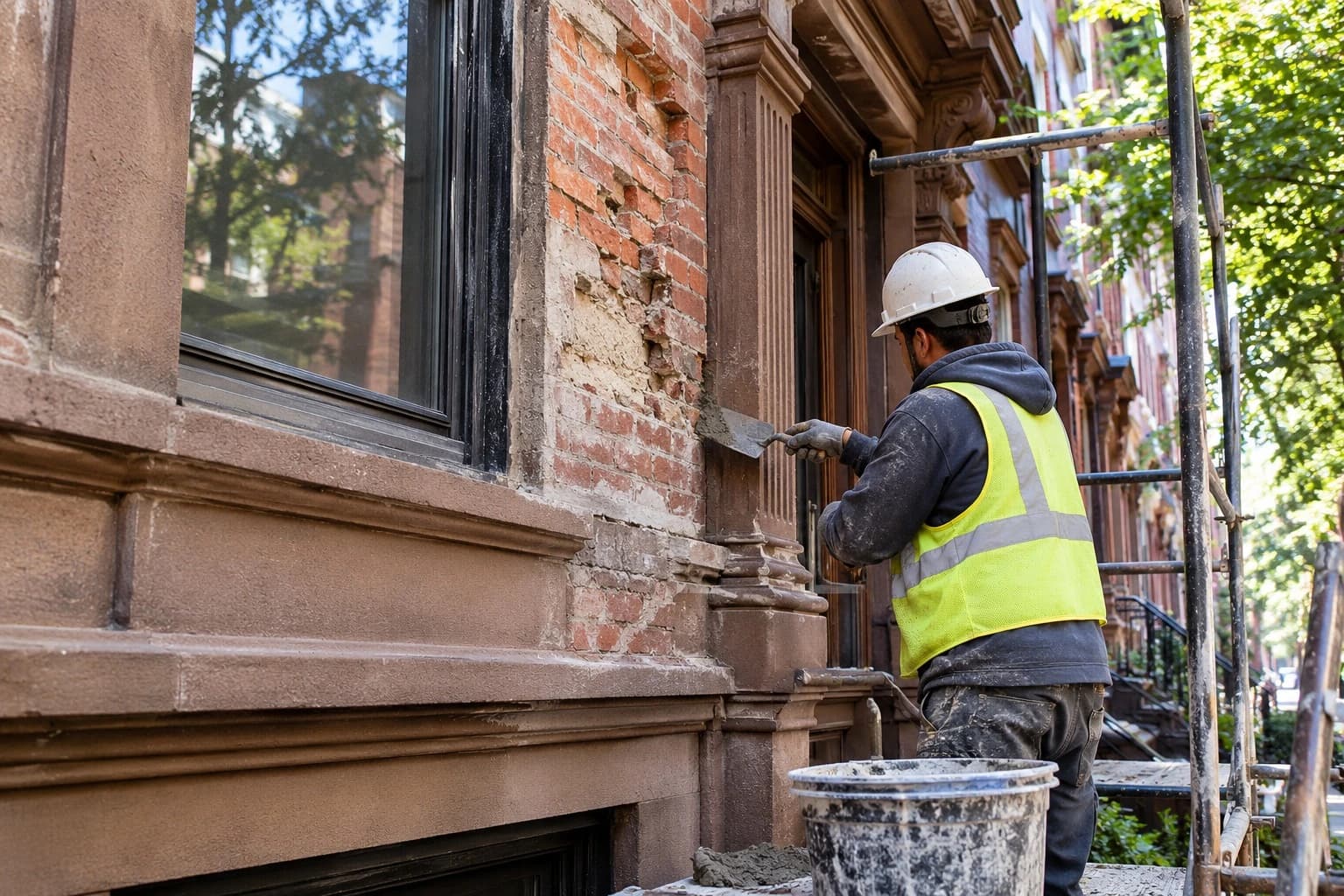
Brownstone facade restoration involves repairing and preserving the exterior of buildings constructed with brownstone, a reddish-brown sandstone commonly used in New York City row houses during the 19th century. Restoration may include patching deteriorated stone, replacing damaged mortar, addressing water infiltration, repairing lintels, and restoring decorative architectural details.
Unlike a simple cosmetic renovation, professional restoration addresses the underlying causes of deterioration while preserving the building’s original appearance whenever practical.
Brownstone that flakes, sheds sand, or crumbles when touched may be deteriorating because of moisture penetration, weather exposure, or incompatible previous repairs.
For example, a stoop with visibly eroding edges or a facade with missing surface layers may require specialized stone repair rather than ordinary patching. A professional assessment can determine whether localized repairs or more extensive restoration are necessary.
Cracks around windows, doors, cornices, and stone panels can indicate deteriorating materials, thermal movement, or building movement.
Hairline cracks are not always serious, but widening cracks, recurring fractures, or cracks accompanied by displacement deserve prompt attention. If you notice sudden movement or falling masonry, keep people away from the affected area and seek urgent professional evaluation.
Mortar protects masonry joints from water penetration and helps maintain the integrity of the wall system. When mortar becomes powdery, recessed, cracked, or missing, rainwater can enter the facade and accelerate deterioration.
Professional repointing removes deteriorated mortar to an appropriate depth and installs compatible replacement mortar. For historic brownstone, choosing the correct mortar composition is particularly important because overly hard mortar can damage softer surrounding materials.
Dark streaks, persistent damp areas, and white, powdery deposits known as efflorescence can indicate moisture movement through the facade.
Common sources include leaking gutters, defective flashing, failed sealants, and deteriorated masonry joints. Simply cleaning the stains may not solve the problem. Identifying and correcting the water source is essential to prevent recurring damage.
Paint that bubbles, peels, or separates from a brownstone surface can signal trapped moisture or poor adhesion. Some coatings also restrict the wall’s ability to release moisture, potentially worsening deterioration.
Before repainting, determine why the coating is failing. Depending on the building’s condition and historic requirements, the appropriate solution may involve careful coating removal, compatible repairs, and a suitable breathable finish.
Brownstone stoops, projecting sills, lintels, and decorative cornices face repeated exposure to rain, freezing temperatures, and temperature changes.
Look for broken corners, spalling surfaces, rust stains near metal components, or visibly displaced architectural elements. Loose overhead masonry and unstable stoops can pose safety hazards and should be evaluated promptly.
Patches that crack, separate, discolor, or fall away may indicate poor workmanship, incompatible materials, or an unresolved moisture problem.
Historic brownstone requires repair materials that work with the original stone rather than simply covering visible damage. If deterioration returns in the same location, a professional should investigate the underlying cause before another patch is applied.
A professional restoration project generally follows five steps:
For older New York City buildings, additional requirements may apply depending on the property’s location, landmark status, building classification, and proposed work.
Brownstone restoration costs vary according to the extent of deterioration, facade size, accessibility, material selection, and labor requirements. Scaffolding, sidewalk protection, specialized decorative repairs, and necessary permits can also affect the budget.
| Cost factor | Why it matters |
|---|---|
| Damage severity | Localized patching differs from extensive stone replacement. |
| Building height and access | Scaffolding and safety measures increase project complexity. |
| Historic details | Ornamental features may require specialized craftsmanship. |
| Water-related repairs | Flashing, drainage, or other moisture corrections may add work. |
| Permits and compliance | Applicable approvals and inspection requirements affect scheduling and cost. |
The best way to establish a realistic budget is to obtain a detailed, site-specific estimate. Addressing minor deterioration early may reduce the likelihood of more extensive repairs later.
Brownstone is a relatively soft sandstone, so unsuitable repair materials or aggressive cleaning can cause additional damage. Experienced restoration professionals understand the importance of compatible mortars, appropriate patching methods, moisture management, and careful preservation of historic details.
Professional restoration can help property owners:
Owners should also ask contractors about relevant experience, insurance, references, written scopes of work, and compliance with applicable New York City requirements.
Infinity Construction NYC provides a point of contact for property owners seeking brownstone facade repair and restoration services in New York City. For buildings in Brooklyn, Manhattan, Queens, and The Bronx, the right repair plan should account for the existing masonry, visible deterioration, water-management issues, and architectural details that give each property its character.
Before committing to a project, ask for a clear assessment of the damage, a written scope of work, compatible material recommendations, and an explanation of any necessary access or compliance measures. These details help you understand what needs attention now and what can be monitored over time.
Whether your brownstone has deteriorating mortar, damaged stonework, or recurring moisture stains, addressing the underlying problem is more effective than repeatedly covering the symptoms. Visit Infinity Construction NYC’s brownstone facade restoration page to learn more about available services and contact the company to discuss your property and request a consultation or estimate.
Crumbling stone, cracks, missing mortar, water stains, peeling coatings, damaged architectural features, and failing patches are seven important warning signs that a brownstone may need restoration. Early inspection helps identify the source of deterioration, prioritize safety, and determine the most appropriate repairs.
For property owners across Brooklyn, Manhattan, Queens, and The Bronx, professional brownstone facade repair can help preserve historic character and protect the building from preventable damage. If you notice any of these warning signs, arrange a professional assessment before the problem becomes more extensive.