Brooklyn's historic brownstones are known for their distinctive facades, elegant stoops, and timeless architectural character. But decades of exposure to rain, snow, temperature changes, moisture, and pollution can cause serious masonry deterioration. Brownstone facade repair in Brooklyn helps address cracks, crumbling stone, water damage, deteriorated mortar, and other problems before they become more expensive or difficult to repair.
Whether your property is in Park Slope, Fort Greene, Brooklyn Heights, Bed-Stuy, Cobble Hill, or Boerum Hill, understanding the warning signs and available repair solutions can help protect your home's historic character and long-term value.
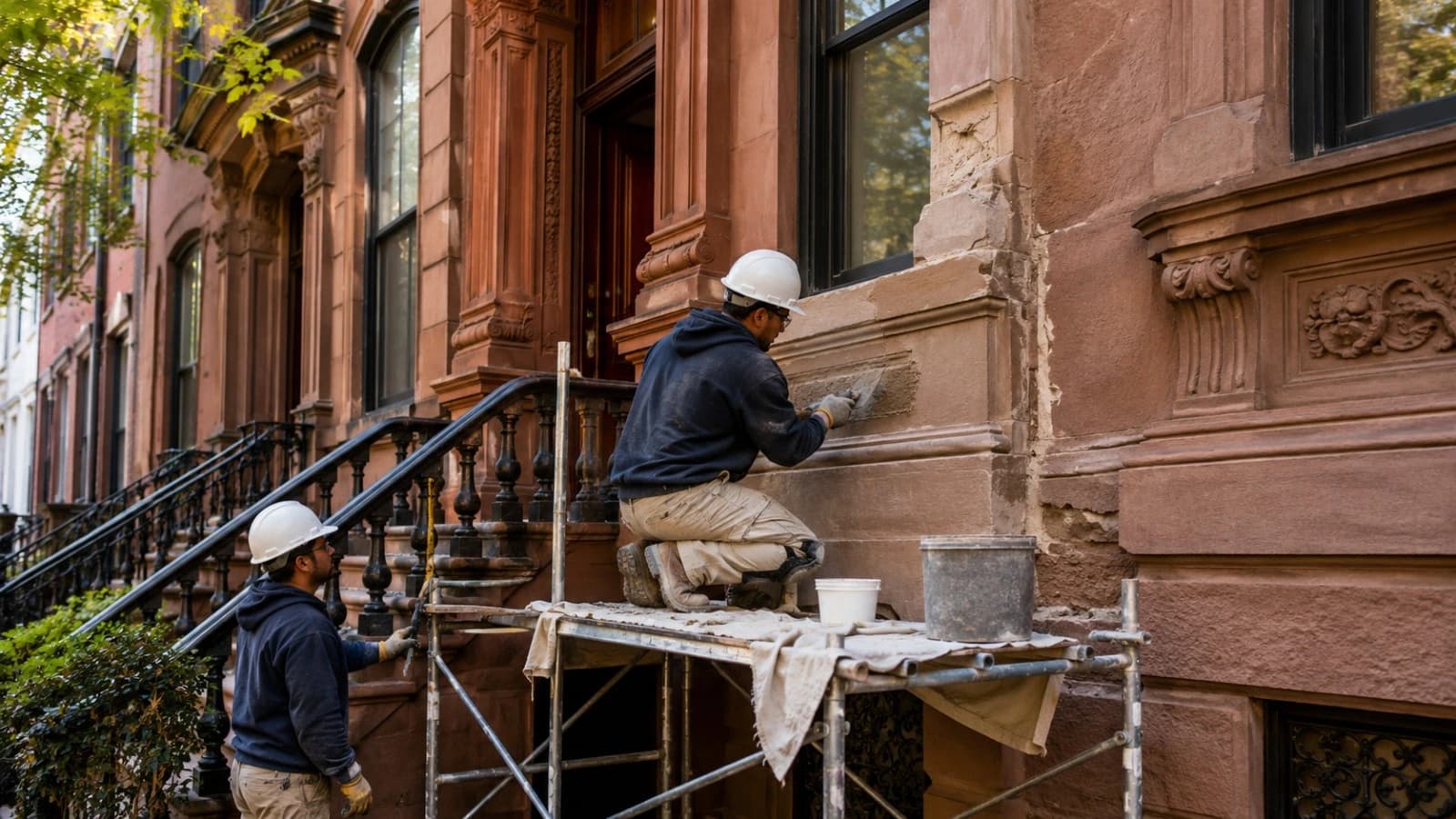
Brownstone facade repair is the process of repairing deteriorated sandstone and related masonry while preserving as much of the original facade as possible. Depending on the condition, restoration may involve patching damaged areas, repairing cracks, repointing mortar joints, replacing severely damaged stone, restoring architectural details, and addressing water intrusion.
The goal is not simply to make the facade look better. A proper brownstone facade restoration in Brooklyn should also address the causes of deterioration and help prevent the same problems from returning.
Brooklyn brownstones can develop several types of facade damage over time. Some problems are cosmetic, while others can indicate more serious deterioration.
Cracks can develop because of moisture, weathering, building movement, aging materials, or previous improper repairs. Small cracks should not automatically be ignored because water can enter through damaged areas and accelerate deterioration.
Crumbling or flaking brownstone is one of the most recognizable signs that repair is needed. Spalling occurs when portions of the stone surface break away, often because moisture penetrates the material and contributes to deterioration.
Water is one of the biggest enemies of historic masonry. Failed joints, damaged flashing, clogged drainage systems, roof problems, and facade cracks can allow water to enter the building envelope.
Old mortar joints can weaken and deteriorate. When joints fail, water can penetrate deeper into the masonry. Proper brownstone masonry repointing can restore deteriorated joints while helping protect surrounding materials.
Brownstone stoops experience constant exposure to weather and foot traffic. Cracks, erosion, loose sections, and surface deterioration can affect both appearance and safety.
Lintels and cornices are important architectural and structural components. Corrosion, cracking, water infiltration, and masonry deterioration can cause these elements to weaken and require professional repair.
Professional brownstone repair begins with identifying the cause of the damage. Simply filling a crack or applying a surface coating may not solve the underlying problem.
A typical repair process may include:
The appropriate method depends on the age, condition, construction, and architectural details of each property.
In many situations, yes. Historic brownstone restoration in Brooklyn often focuses on preserving original material rather than replacing the entire facade.
Localized deterioration may be suitable for patching and restoration. However, when brownstone has become severely deteriorated, unstable, or structurally compromised, stone replacement may be necessary.
An experienced contractor should evaluate the existing material before recommending extensive replacement. Preserving sound original brownstone can help maintain the authentic appearance and historic character of the property.
There is no fixed price for brownstone repair in Brooklyn NYC because every facade has different conditions.
The overall cost can depend on:
A small localized repair can cost considerably less than a complete facade restoration. The most reliable way to determine the cost is to schedule a professional brownstone facade inspection and receive a detailed scope of work.
Homeowners should consider professional inspection when they notice:
If masonry appears loose or unstable, it is especially important to have the condition evaluated promptly.
Certain exterior repairs may require permits or approvals, particularly when a property is located within an NYC historic district or is an individually designated landmark. Requirements depend on the type and scope of work.
Before beginning significant exterior work, property owners should determine whether approval from the NYC Department of Buildings or Landmarks Preservation Commission is required. A professional contractor familiar with NYC facade work can help homeowners understand the applicable requirements.
Regular maintenance can help extend the life of a brownstone facade. Homeowners should monitor cracks, inspect areas around windows and doors, maintain drainage systems, address leaks promptly, and avoid allowing small masonry problems to remain unresolved for years.
Water management is particularly important. Even a carefully restored facade can deteriorate again if the source of moisture intrusion is not corrected.
For older properties, periodic professional inspections can help identify problems that are difficult to see from street level.
Historic masonry requires specialized knowledge. Brownstone is not treated exactly like modern concrete or brick, and inappropriate materials or repair techniques can sometimes cause additional deterioration.
Professional brownstone repair contractors in Brooklyn understand the importance of compatible materials, careful surface preparation, masonry repointing, water management, and preservation of historic architectural details.
A qualified contractor can also help determine whether a facade requires simple maintenance, localized repair, stabilization, or more extensive restoration.
Look for cracks, crumbling stone, loose masonry, deteriorated mortar, water stains, discoloration, damaged stoops, or recurring moisture. Even if damage appears minor, an inspection can determine whether the problem is superficial or connected to deeper deterioration.
The repair depends on the condition of the stone. Professionals may remove loose material and use compatible patching materials for localized damage. Severely deteriorated sections may require stone replacement. The underlying source of moisture or deterioration should also be addressed.
The timeline depends on the size and condition of the facade and the extent of repairs. Smaller projects may be completed relatively quickly, while extensive restoration involving scaffolding, stone replacement, architectural details, or approvals can take significantly longer.
Repair generally focuses on correcting specific areas of damage, while restoration is a broader process intended to preserve and return historic architectural elements to an appropriate condition. A restoration project may include multiple repair techniques across the facade.
Common causes include prolonged moisture exposure, freeze-thaw cycles, weathering, failing mortar joints, poor drainage, facade leaks, and inappropriate previous repairs. Identifying the cause is essential because repairing visible damage alone may not prevent continued deterioration.
Loose or falling masonry, rapidly expanding cracks, significant crumbling, water entering the building, damaged lintels, or unstable stoop components deserve prompt professional evaluation. These conditions can worsen and may create safety concerns if left untreated.
Infinity Construction NYC provides professional masonry and exterior restoration services for brownstone properties throughout Brooklyn and the surrounding NYC area. Our team understands that historic facades require careful attention to existing materials, architectural details, moisture problems, and the specific condition of each property.
From brownstone facade repair in Brooklyn and brownstone patching to masonry repointing, stoop restoration, stone replacement, waterproofing, and other exterior masonry services, we focus on practical solutions designed to restore damaged areas while preserving the character of the property.
If you have noticed cracking, crumbling brownstone, water damage, or deteriorating masonry, don't wait until a small problem becomes a major restoration project. Contact Infinity Construction NYC to schedule a consultation and discuss the right repair solution for your brownstone facade.
A Brooklyn brownstone facade can last for generations when it receives appropriate care and timely repairs. Cracks, spalling, water damage, deteriorated mortar, damaged stoops, and failing architectural details should be evaluated before deterioration spreads.
The best approach to brownstone restoration in Brooklyn is to identify the cause of the problem, use appropriate repair techniques, manage moisture, and preserve original architectural materials whenever practical.
Whether your property needs a small brownstone patch, masonry repointing, stone replacement, or more extensive facade restoration, professional evaluation is the first step toward protecting your building for years to come.